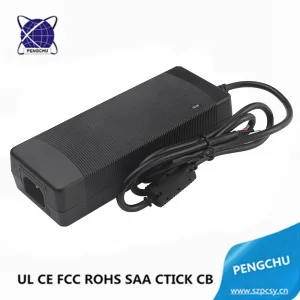
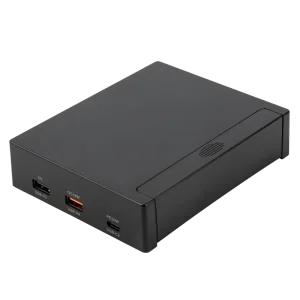
Optimized SMPS models engineered to meet strict Australian SAA standards and the critical requirements of Canberra systems integrators.
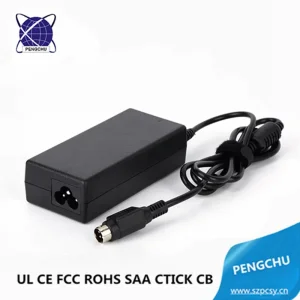
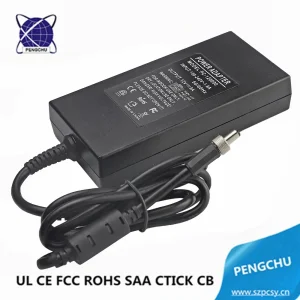
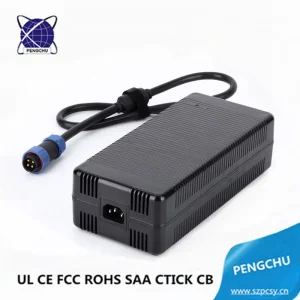
An in-depth analysis of regulatory shifts, technological transitions, and global supply chain integration for Australian Capital Territory engineers.
As the administrative and strategic heartbeat of Australia, the Australian Capital Territory (ACT) is undergoing a major evolution. Beyond its foundational government departments, Canberra has emerged as a key hub for defence research, advanced space applications, telecommunications engineering, and medical technology. This industrial profile requires highly reliable and efficient hardware solutions. Among these, the Switch Mode Power Supply (SMPS) is an essential component, acting as the bridge between fluctuating power grids and sensitive digital micro-electronics.
Whether powering secure communications hubs in Russell, telemetry arrays at tracking stations, or advanced diagnostic devices in the Canberra Hospital, switch-mode power adapters must perform consistently under continuous load. In these settings, power failure is more than just inconvenient; it can compromise data integrity and system availability. Understanding these requirements, Shenzhen JDI Power Supply Co., Ltd. provides optimized SMPS units engineered to meet these demanding local operating conditions.
The power supply industry is undergoing a transition driven by global decarbonization initiatives and the rise of edge-computing hardware. The ACT Government's commitment to net-zero emissions highlights the value of energy efficiency in office complexes, data centers, and public infrastructure. Our switch-mode power supplies are designed to meet this need by reducing energy waste.
Modern SMPS designs have moved away from traditional linear systems toward high-frequency topologies. By utilizing advanced power semiconductors—including Gallium Nitride (GaN)—engineers can achieve operating frequencies exceeding 100 kHz. This high frequency allows for smaller magnetic components, reducing the physical size of the adapter while maintaining high power outputs. Our adapters meet the stringent DoE Level VI and CoC Tier 2 requirements, ensuring that standby power consumption remains below 0.075W. This is crucial for large-scale enterprise deployments across Canberra's corporate and public sectors.
How JDI Power's customized electrical topologies match the specific operational domains of the ACT.
Defence operations require high levels of electromagnetic compatibility (EMC). Our power adapters are designed to suppress electromagnetic interference (EMI), meeting CISPR 32/EN 55032 Class B standards to prevent disruption to sensitive wireless communication channels.
Healthcare facilities require strict electrical isolation to protect patients and staff. Our medical-grade adapters conform to IEC/EN 60601-1 standards, featuring 2x MOPP (Means of Patient Protection) isolation barriers and extremely low leakage currents (<100µA).
Canberra's expanding smart city network depends on decentralized CCTV cameras and IoT sensor nodes. Our universal 12V to 24V adapters provide stable power under wide outdoor temperature ranges, helping to prevent system downtime.
For government departments, high-power desktop SMPS systems must offer high reliability. Our units undergo component stress analysis and thermal profiling to achieve calculated MTBF rates exceeding 100,000 operating hours.
For decades, linear power supplies were favored for their simple design and low noise. However, the demands of modern computing and telecom infrastructure have made the efficiency and compact size of SMPS systems indispensable. Below is a comparison highlighting why Canberra systems engineers rely on modern SMPS technology:
| Parameters | Traditional Linear Power Supplies | Modern Switch Mode Power Supplies (SMPS) | Canberra Application Impact |
|---|---|---|---|
| Electrical Efficiency | 30% - 40% (high energy loss as heat) | 80% - 95% (minimal waste heat) | Reduces HVAC cooling loads in regional ACT data hubs. |
| Physical Dimensions & Weight | Large, heavy copper transformers | Compact, lightweight high-frequency systems | Easy to integrate into compact wall-mount panels and brackets. |
| Input Voltage Tolerance | Narrow range (e.g., 220-240V AC only) | Universal Range (85V - 264V AC) | Protects against voltage drops in remote regions. |
| Thermal Profile | Requires large passive heat sinks | Efficient active cooling, lower temperatures | Extends the operational life of adjacent electronic components. |
| Standby Loss | Continuous load (high parasitic draw) | < 0.075W (Level VI Compliance) | Saves energy across large-scale agency hardware deployments. |
ShenZhen JDI Power Supply Co., Ltd. combines advanced automation with strict quality controls to deliver reliable OEM/ODM services.
Established in 2004 in Shenzhen, ShenZhen JDI Power Supply Co., Ltd. is a high-tech manufacturing enterprise focused on research, design, and testing of power converters. Our facility spans over 6,000 square meters and features automated SMT systems, optical inspection lines, and thermal aging labs.
Led by a senior design engineer with 27 years of experience in power electronics, our 20-person R&D team has developed a portfolio of more than 1,000 standard and customized products. This experience enables us to deliver power supplies that meet global safety regulations, including Australia’s SAA standards.
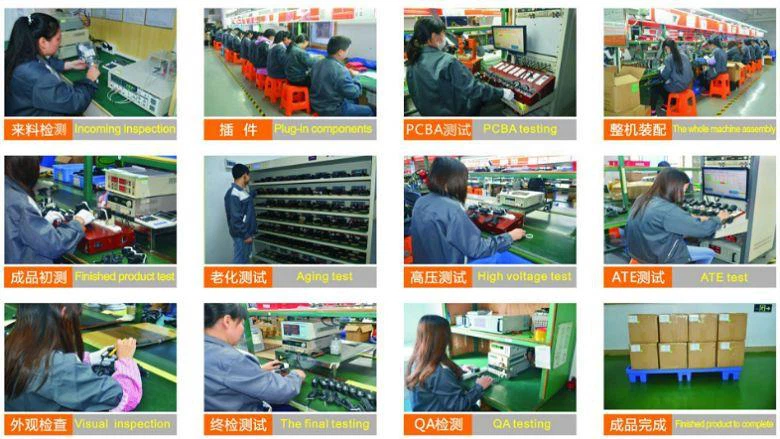
Our quality control protocols include component stress analysis, high/low temperature thermal cycling, vibration testing, and electromagnetic compatibility (EMC) evaluations. These testing procedures ensure that every power adapter meets high standards of reliability before delivery.
A selection of certified desktop, wall-mount, and multi-port SMPS units designed for commercial and industrial use.
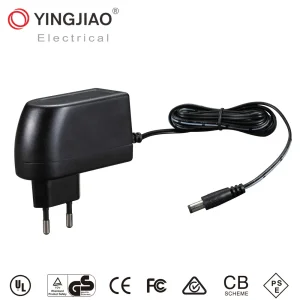
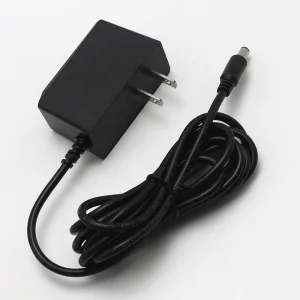
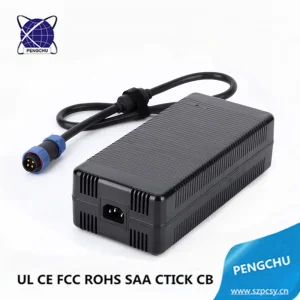
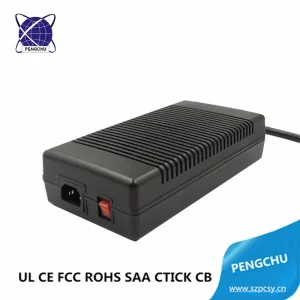
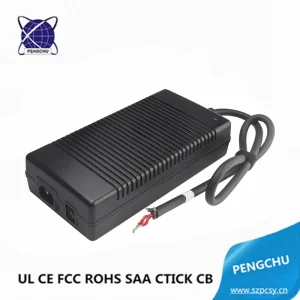
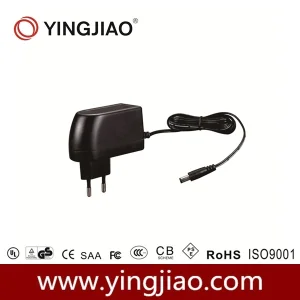
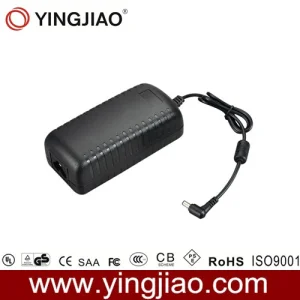
Importing power components into Australia requires adherence to local safety standards. The Electrical Equipment Safety System (EESS) categorizes power adapters as Level 3 (high-risk) equipment, requiring mandatory registration and certification. Under the Australian Capital Territory's guidelines, any electrical power source plugged into utility power must display the Regulatory Compliance Mark (RCM) and hold a valid SAA approval certificate.
Our manufacturing facility keeps certificates up to date for several target markets:
Maintaining these certifications requires consistent manufacturing quality. We audit our materials and components to verify that each production run meets the regulatory standards of the destination country.
To maintain reliability standards, we operate a dedicated testing laboratory equipped to evaluate power supplies under various operating conditions. Our testing protocols include:
MTBF Analysis & Accelerated Life Testing: Using MIL-HDBK-217F models, we calculate MTBF limits under worst-case ambient temperatures. Standard units are verified to run reliably up to 40°C or 50°C using component de-rating guidelines.
Thermal Shock & Environmental Cycling: Adapters are subjected to high/low temperature cycles (-40°C to +85°C) and high humidity (95% RH) to verify housing integrity and solder joint quality.
Vibration & Drop Testing: Units undergo transit vibration tests on a shaker table to simulate shipping stresses, ensuring that the internal components and external casing remain secure during delivery to Australia.
Common questions from Canberra systems engineers and sourcing managers regarding our power adapter technology.
Whether you require standard 12V adapters with Australian plug configurations, high-voltage industrial power supplies, or certified medical power adapters, our engineering team can help.
Request a Custom Design Consultation JDI Power Supply