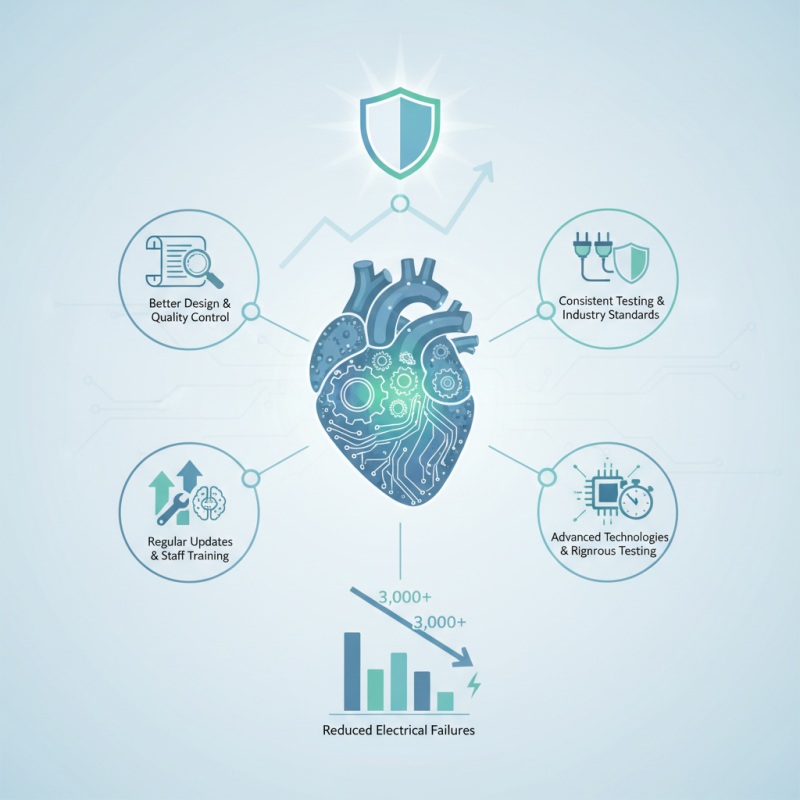
The safety performance of medical power supply devices plays a crucial role in healthcare. According to a recent report by the Global Health Technology Coalition, over 3,000 hospital incidents annually are linked to electrical failures in medical devices. This highlights the urgent need to improve safety performance of medical power supply devices. Experts emphasize that better design and quality control are vital to prevent such issues.
Dr. Emily Tran, a leading authority in biomedical engineering, states, "Ensuring safety in medical power supplies can save lives." Her insights underline the importance of consistent testing and upholding industry standards. Healthcare facilities must prioritize these aspects to enhance safety.
However, improvements do not come without challenges. Many existing devices might not meet the latest safety standards. Regular updates and training for medical staff are often overlooked. Reflecting on these gaps can push the industry toward more robust safety strategies. Investing in advanced technologies and rigorous testing is key to progress.
Ensuring medical power supply safety compliance is crucial for healthcare facilities. According to the International Electrotechnical Commission (IEC), nearly 30% of medical devices face safety risks due to power supply failures. Regular testing and adherence to IEC 60601 standards can significantly reduce these risks.
Developing a robust safety protocol is essential. This includes rigorous risk assessments and strict quality control measures. Many organizations overlook these steps, leading to increased incidents. A study published in the Journal of Patient Safety emphasizes the importance of investing in staff training. Well-informed personnel can better manage and respond to power supply issues, which directly impacts patient safety.
Regular audits can identify potential compliance gaps. The FDA reported that 15% of adverse events were linked to power supply malfunctions. This statistic highlights the need for continuous monitoring and improvement. Adopting a mindset of perpetual evaluation fosters a safety-first culture. Systematic approach to documenting power supply performance is also critical. Such practices can reveal patterns and lead to proactive solutions.
| Practice | Description | Benefits | Compliance Standards |
|---|---|---|---|
| Regular Maintenance | Conduct routine checks and repairs of power supplies. | Prevents failures and extends equipment life. | ISO 14971, IEC 60601 |
| Risk Assessment | Identify potential hazards associated with power supplies. | Enhances safety protocols and minimizes incidents. | ISO 14971 |
| User Training | Provide comprehensive training to staff on power supply safety. | Increases awareness and proper handling of equipment. | IEC 60601-1 |
| Quality Components | Use high-quality components in power supply manufacturing. | Ensures reliability and safety of medical devices. | FDA 21 CFR Part 820 |
| Compliance Audits | Perform regular audits to ensure adherence to safety regulations. | Identifies non-compliance issues and areas for improvement. | IEC 60601, ISO 13485 |
: Medical power supply safety directly impacts patient outcomes and device reliability. Without it, devices may fail.
Nearly 30% of medical devices encounter safety risks from power supply failures, according to IEC data.
Well-informed personnel can better manage power supply problems, thus improving overall patient safety.
Overlooking maintenance leads to increased risks and potential delays in treatment, compromising patient safety.
Regular audits help to pinpoint compliance gaps. They can prevent power supply malfunctions linked to adverse events.
Historical data may be misleading; it can overlook emerging technology and current practices.
These programs provide essential skills to prevent electrical hazards, ensuring devices operate safely and effectively.
Variations in training can leave knowledge gaps, leading to serious safety risks in handling medical equipment.
Continuous education maintains high safety standards and fosters accountability among healthcare professionals.
Without a plan, facilities may struggle to respond to unforeseen power supply issues, risking patient safety.
To improve safety performance of medical power supply devices, it is essential to follow best practices that ensure compliance with safety standards. This includes implementing rigorous testing protocols that adhere to essential safety performance standards, which not only enhance reliability but also support patient safety metrics.
Additionally, innovative technologies play a crucial role in augmenting the safety features of these devices, offering advanced solutions that can minimize risks. Training and certification programs are equally important, as they equip professionals with the necessary knowledge and skills to maintain and monitor medical power supplies effectively. By focusing on these areas, stakeholders can significantly improve the safety performance of medical power supply devices, ultimately safeguarding patient health and well-being.

 JDI Power Supply